History of Pena Palace: From Monastery to Royal Palace
A ruined monastery, a king with a dream, a German architect, and a palace that became a museum in 1910.
Book this visit
Some links are affiliate links: if you book, we may earn a commission at no extra cost to you. How this works
 Our pick Pena ticket included
On Viator
Half-day Sintra tour from Lisbon with Pena Palace ticket
A guide brings the history to life, with the palace ticket included.
- 5 hrs
- Small group
- Transport from Lisbon
- Timed ticket booked for you
- Free cancellation
Live guide: Portuguese, English, Spanish
From €80 per person · Oct 2026
Check dates — Half-day Sintra tour from Lisbon with Pena Palace ticket, Viator (opens in a new tab) Pena ticket as an option
On Viator
Private full-day Sintra tour with Pena Palace and Regaleira
Your own driver-guide from your hotel; Pena tickets come with the “skip the line” option.
- 8 hrs
- Hotel pickup
- Private
- Transport from Lisbon
- Free cancellation
Live guide: Portuguese, English, Italian, French, Spanish
From €148.61 per person · Oct 2026
Check dates — Private full-day Sintra tour with Pena Palace and Regaleira, Viator (opens in a new tab)Sorted by price, lowest first. Prices from the booking platform; the price at checkout is the one that counts.
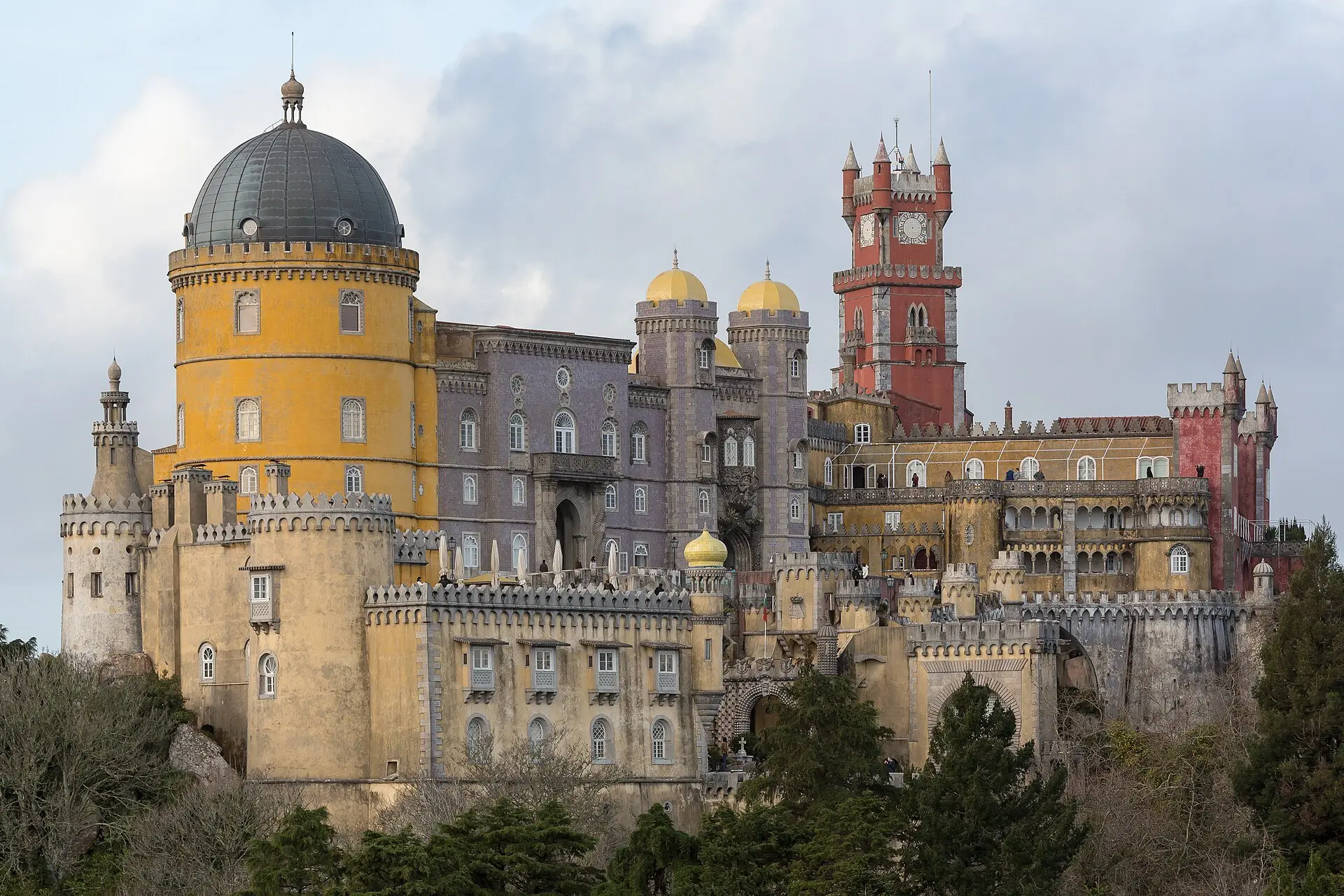
Pena Palace was built in 1842–1854 by King Ferdinand II, who turned the ruins of a monastery on a Sintra hilltop into a Romantic palace, with Wilhelm Ludwig von Eschwege as architect (Wikipedia). It has been part of the UNESCO World Heritage Site since 1995, as part of the Cultural Landscape of Sintra (UNESCO).
In short
- Before the palace: a Hieronymite monastery founded by King Manuel I, left in ruins by the 1755 Lisbon earthquake (its chapel survived).
- Builder: King Ferdinand II; architect: Wilhelm Ludwig von Eschwege.
- Built: 1842–1854, almost complete by 1847.
- Bought by the State in 1889; a museum after the 1910 revolution.
What was on the hill before the palace?
On the site stood a Hieronymite monastery founded by King Manuel I, left in ruins by the 1755 Lisbon earthquake (its chapel survived). The ruins and the surviving chapel were what Ferdinand II found when he took an interest in the hill (Wikipedia).
Who built the palace, and when?
King Ferdinand II, consort of Queen Maria II, set out to turn the monastery remains into a palace. He gave the work to Wilhelm Ludwig von Eschwege, a German amateur architect. Construction ran from 1842 to 1854; the palace was almost complete by 1847 and the clock tower was finished in 1843 (Wikipedia).
The result mixes styles on purpose: Neo-Gothic, Neo-Manueline, Neo-Islamic and Neo-Renaissance elements sit side by side, which is why Pena is called one of the major expressions of 19th-century Romanticism.
What happened after Ferdinand II?
After Ferdinand’s death the palace passed to his second wife, Elise Hensler, Countess of Edla, who sold it to King Luís. The State bought it in 1889. After the revolution of 1910 it was classified as a national monument and turned into a museum; Queen Amélia spent her last night in Portugal at Pena in October 1910, before going into exile (Wikipedia).
Why are the walls red and yellow?
The bright colours are original. Over time the façades faded, and they were repainted in their original colours by the end of the 20th century (Wikipedia).
The park around it
Ferdinand II also laid out the park of over 200 hectares around the palace, with lakes, viewpoints and garden buildings. The chalet he built with the Countess of Edla stands in it. See our park guide.
To see the rooms where this history happened, see what to see inside and which ticket to buy.
Questions people ask
Who built Pena Palace?
King Ferdinand II had it built in 1842–1854, with Wilhelm Ludwig von Eschwege as architect.
What was there before the palace?
There was a Hieronymite monastery founded by King Manuel I, left in ruins by the 1755 Lisbon earthquake (its chapel survived).
Is Pena Palace a UNESCO World Heritage Site?
Yes, since 1995, as part of the Cultural Landscape of Sintra.