Is Pena Palace Worth It? What a Visit Really Feels Like
Yes, but probably not in the way you imagine. The terraces, the views and the park are the experience; the rooms are a bonus that depends on the crowds.
Book this visit
Some links are affiliate links: if you book, we may earn a commission at no extra cost to you. How this works
 Our pick Park entry, no palace rooms
On Viator
Lisbon to Sintra day trip: Pena Park, Sintra and Cascais
If the terraces and park are what you want, this is the cheapest way to get there from Lisbon.
- 10 hrs
- Transport from Lisbon
- Free cancellation
Live guide: English
From €22 per person · Oct 2026
Check dates — Lisbon to Sintra day trip: Pena Park, Sintra and Cascais, Viator (opens in a new tab) Pena ticket as an option
On Viator
Sintra, Pena Palace and Quinta da Regaleira from Lisbon
A low-cost guided day with Regaleira too; pick the option with the Pena entrance.
- 8 hrs
- Transport from Lisbon
- Free cancellation
Live guide: English, French, Spanish
From €30.32 per person · Oct 2026
Check dates — Sintra, Pena Palace and Quinta da Regaleira from Lisbon, Viator (opens in a new tab) Pena ticket included
On Viator
Half-day Sintra tour from Lisbon with Pena Palace ticket
The palace interior in half a day: Essential ticket, local guide and a van for up to 8 people from Lisbon.
- 5 hrs
- Small group
- Transport from Lisbon
- Timed ticket booked for you
- Free cancellation
Live guide: Portuguese, English, Spanish
From €80 per person · Oct 2026
Check dates — Half-day Sintra tour from Lisbon with Pena Palace ticket, Viator (opens in a new tab) Pena ticket as an option
On Viator
Private full-day Sintra tour with Pena Palace and Regaleira
Your own driver-guide from your hotel; Pena tickets come with the “skip the line” option.
- 8 hrs
- Hotel pickup
- Private
- Transport from Lisbon
- Free cancellation
Live guide: Portuguese, English, Italian, French, Spanish
From €148.61 per person · Oct 2026
Check dates — Private full-day Sintra tour with Pena Palace and Regaleira, Viator (opens in a new tab)Sorted by price, lowest first. Prices from the booking platform; the price at checkout is the one that counts.

Yes, Pena Palace is worth visiting, but probably not in the way you imagine. For most people the experience is the mountain, the colours, the terraces, the views and the park around it. The palace rooms are a second layer that some visitors love and others find too crowded to enjoy. Plan for the version of Pena you actually want, and the day goes well.
In short
- The outside is the part almost everyone loves: terraces, towers, colours and views.
- The inside depends on you and on the crowds: visitors often describe being moved through the rooms at busy times.
- It is more physical than it looks: uphill walking, steps and queues add up.
- Go early, keep the day simple, and leave room for the park.
This guide is built from first-hand visits and from what travellers report about their days at Pena. Official prices, hours and rules come from Parques de Sintra and are marked as such; visitor experiences are labelled as reports.
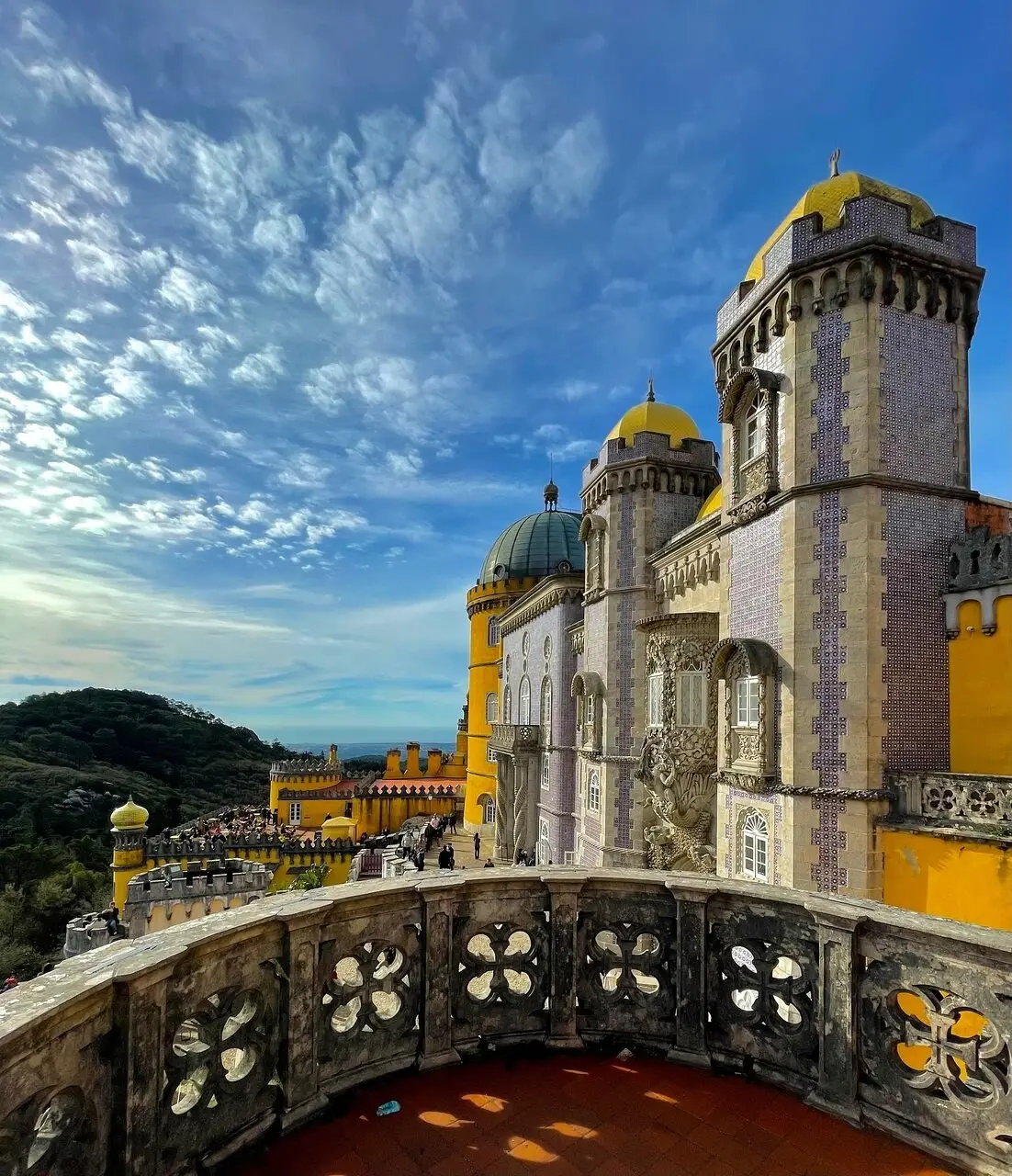
Why is Pena Palace so famous?
Because it looks unlike anything else in Portugal. You come up the hill and see a palace in bright yellow and red, with towers, domes, battlements and carved stone, sitting above a forest. Built by King Ferdinand II in 1842–1854 on the ruins of a monastery, it is one of the major expressions of 19th-century Romanticism (history).
The setting matters as much as the building. Pena sits high above Sintra, inside a park of over 200 hectares. A recurring point from guides: many visitors see the palace, walk the main courtyards and leave without exploring the park at all. That is a big part of why opinions differ so much.
The palace is the photograph. The park and the mountain are the experience.
Is it worth going inside?
There is no single answer.
If you are fascinated by royal history, architecture and interiors, going inside makes sense. If you have only one day in Sintra, dislike crowds and want to see several places, it is much less obvious.
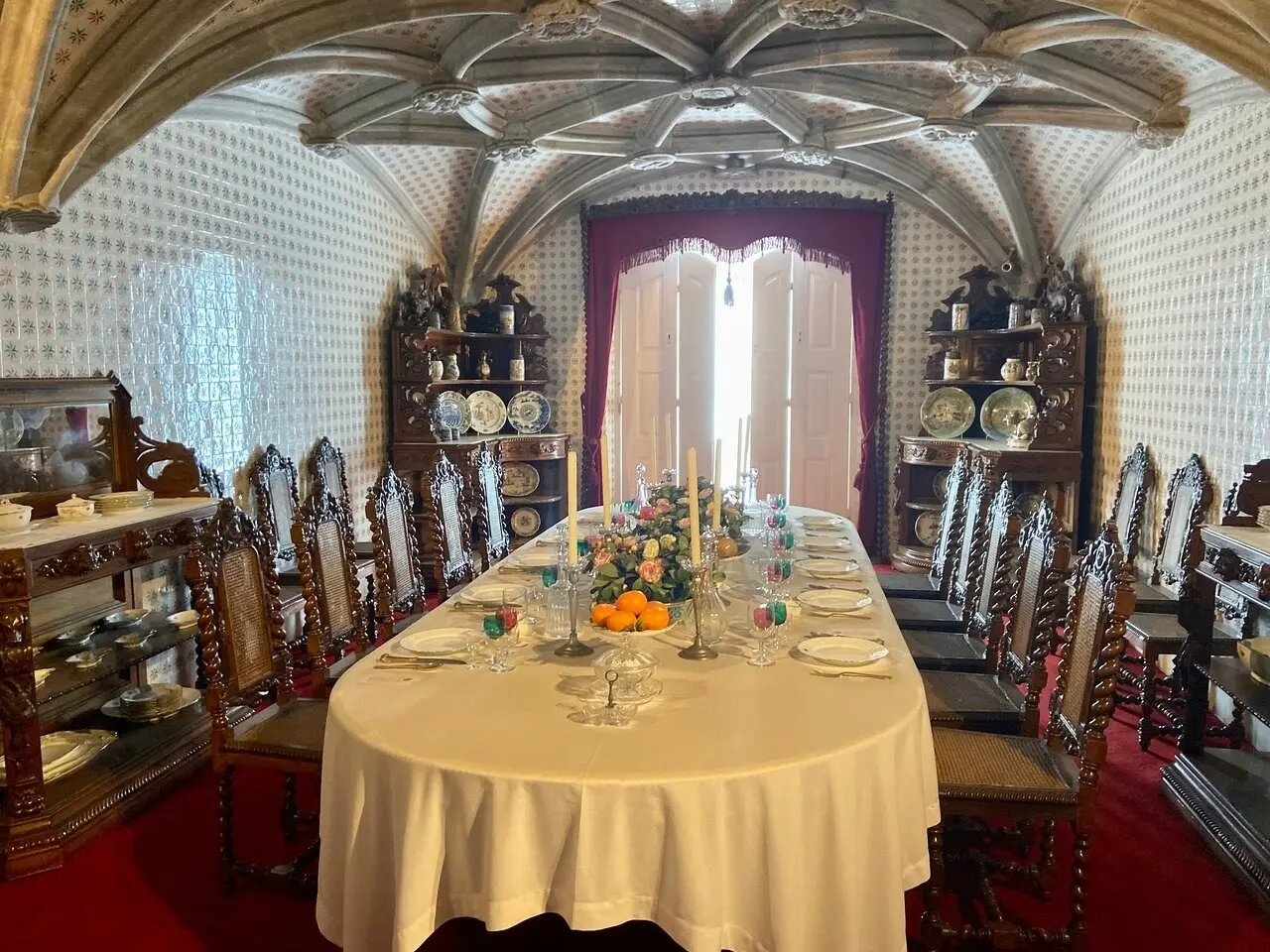
Visitor reports repeat the same point: at busy times the interior can be very crowded, and people feel moved through the rooms rather than given time to look. One visitor photographed the information panels to read them later rather than hold up the people behind. Another said the rooms were interesting but skipping them would not have changed their day much.
The interior is not the problem. The conditions under which you see it can be.
The ticket options also shape what you see. Officially, the Essential Visit covers the New Palace wing of the palace (self-guided, at a booked time) and the whole Park of Pena, including the Chalet of the Countess of Edla, while the Private Apartments are reserved for the Complete, Guided and Theatrical visits (Parques de Sintra). So before paying more, ask yourself one question: what do I want from Pena?
- “The famous palace, the terraces, photos and the views”: you probably don’t need to build your day around the interior.
- “How the royal family lived inside”: then the rooms become the point, and the Complete Visit is worth a look.
The outside is often the best part
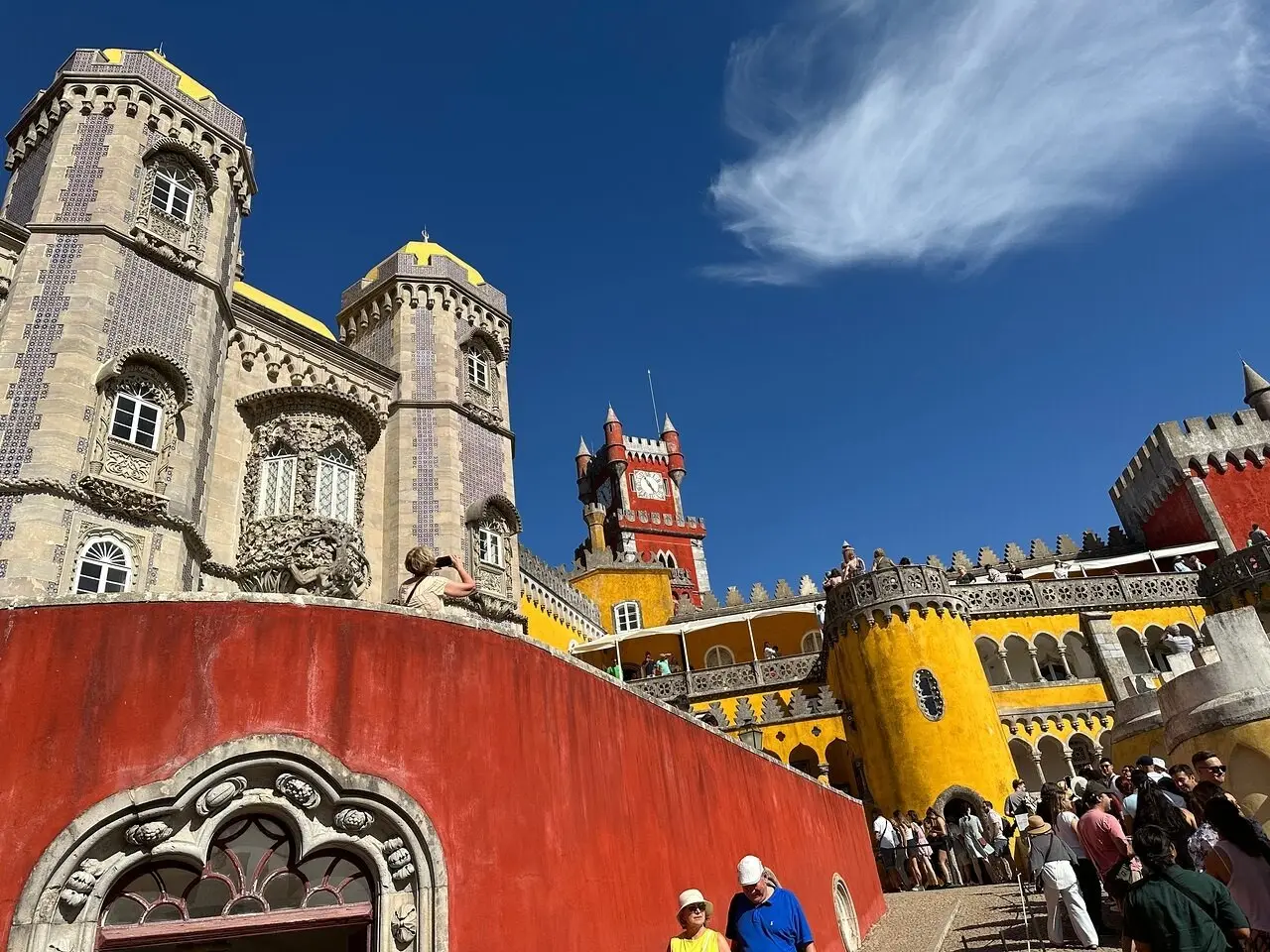
The strongest pattern in visitor experiences is how much people enjoy the exterior: the terraces with their views, the colours seen from different angles, and a real sense of how strange and inventive the building is.
Visitor reports and some tour listings say the cheaper park ticket also gets you onto the palace terraces, without the timed interior entry. The official park-ticket description lists the park sights but does not mention the terraces, so check what your ticket includes when you buy it (ticket guide).
Several travellers say they would choose the outside and the park over the rooms if time is short. That doesn’t mean you should skip the rooms. It means you should know what you are buying:
- The outside gives you what most people picture: architecture, colour, the mountain and the views.
- The inside adds the rooms, the history and the royal atmosphere.
For a first visit with limited time, the first layer is often enough.
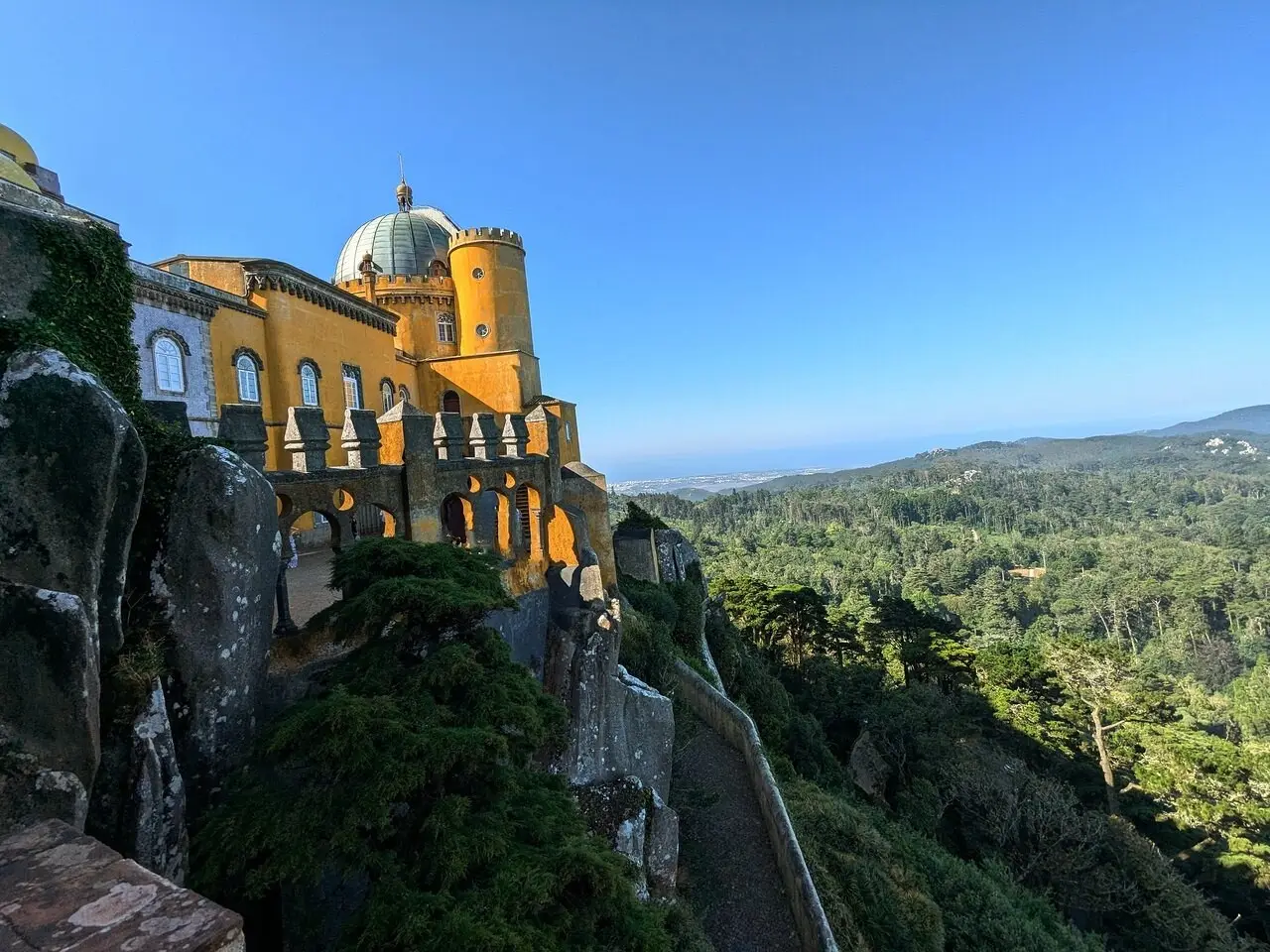
It is more physical than it looks
Photos make Pena look easy. In reality there is uphill walking, steps, uneven surfaces and real distances between points.
From the park entrance to the palace, the official estimate is about 30 minutes uphill from the park entrance (ticket conditions); visitors report anything from about 10 to 20 minutes or more, depending on pace. The park shuttle costs €4.50 return, but visitors report waits of 15 to 40 minutes at busy times.
And that is only the start. You walk inside the complex, then to a viewpoint, back down, perhaps on to the Moorish Castle, into town and to Quinta da Regaleira. By the afternoon the question is not “can I walk?” but “do I still enjoy walking?” Sintra rewards people who leave room in the day.
How long do you need?
Plan about 1.5–2 hours for the terraces and the outside, 2.5–3 hours with the palace rooms, longer to explore the park. Rather than counting hours, think about what you want:
- Photos: about 1.5–2 hours on the terraces, outside and at viewpoints.
- The palace rooms: about 2.5–3 hours, plus a buffer for reaching the palace for your timed entry.
- The park, properly: several hours, without rushing to the next sight.
- Pena as one stop in a packed day: keep it focused.
Strict entry times and the journey up
If you have a timed palace ticket, take the time seriously. The official rule: palace tickets are for one date and entry time; there is no tolerance for delays, you cannot go in early, and a missed slot is not refunded. One visitor who arrived late after renting a car was told to build in far more margin than they expected.
The trip is not just distance. It is train → town → transport → mountain road → entrance → uphill walk → palace, and every stage can take longer than planned. Don’t aim to arrive exactly at your ticket time.
For transport, the official route is the CP train to Sintra and Scotturb bus 434 from Sintra station to Pena (getting there). Visitors often report crowded buses and queues at busy times, and several say Uber, Bolt or taxis were easier around Sintra. One January 2026 visitor found Bolt cheaper and more convenient than expected. But a car does not skip traffic: when the hill road is blocked, the car waits too. Going early matters more than the transport you choose.
When is the best time to go?
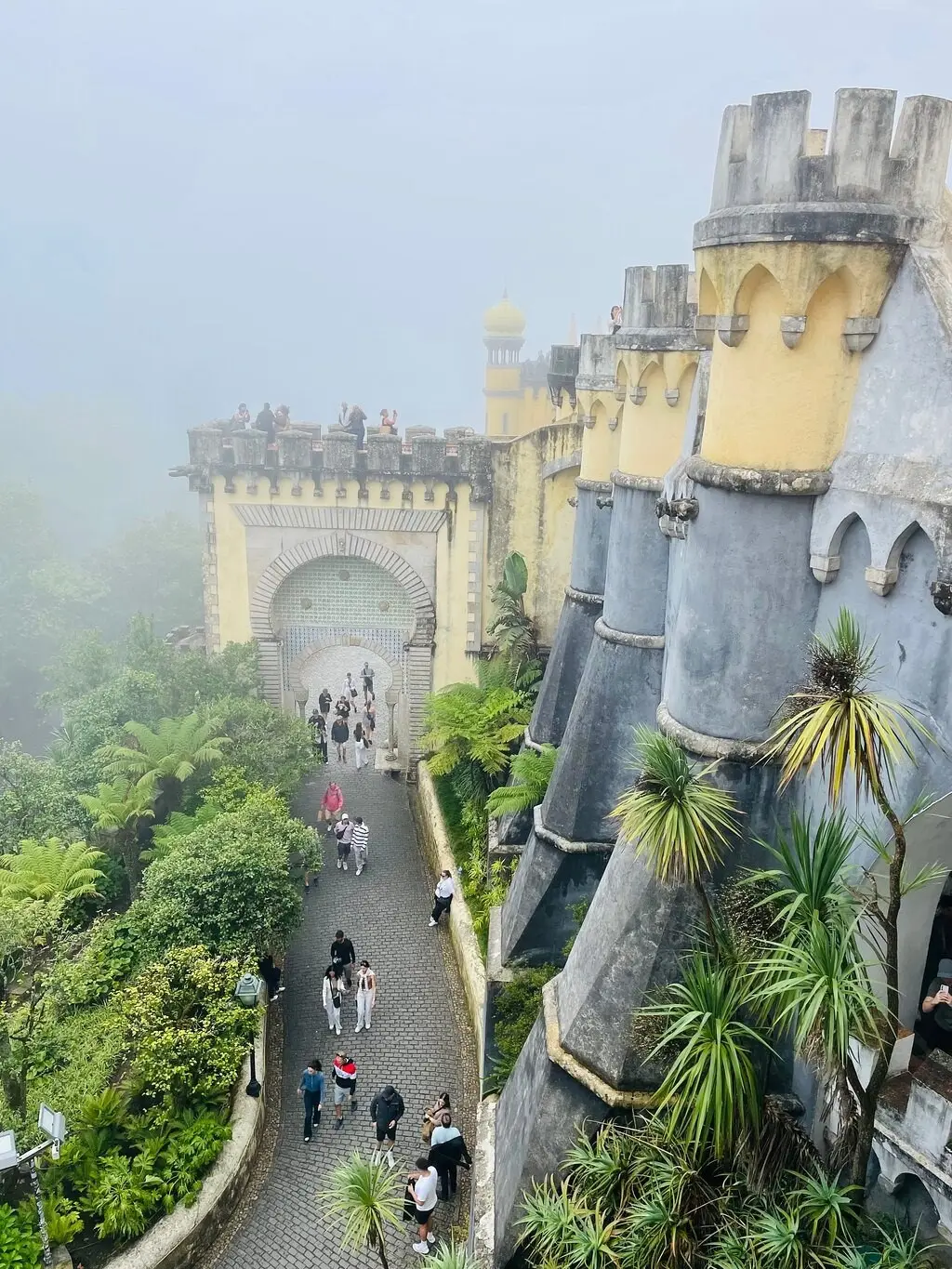
To avoid crowds, early morning is the safest choice. Local guides also suggest that if you are visiting the interior, the first morning entry or a later afternoon slot is better than the middle of the day.
The season matters even more, according to visitor reports:
- Summer: expect crowds, traffic and pressure on transport.
- May and June: beautiful but increasingly busy; early starts pay off.
- September and October: can still feel crowded.
- Late February to early March: often described as one of the calmest periods.
- December: described as much emptier and more atmospheric, with less predictable weather.
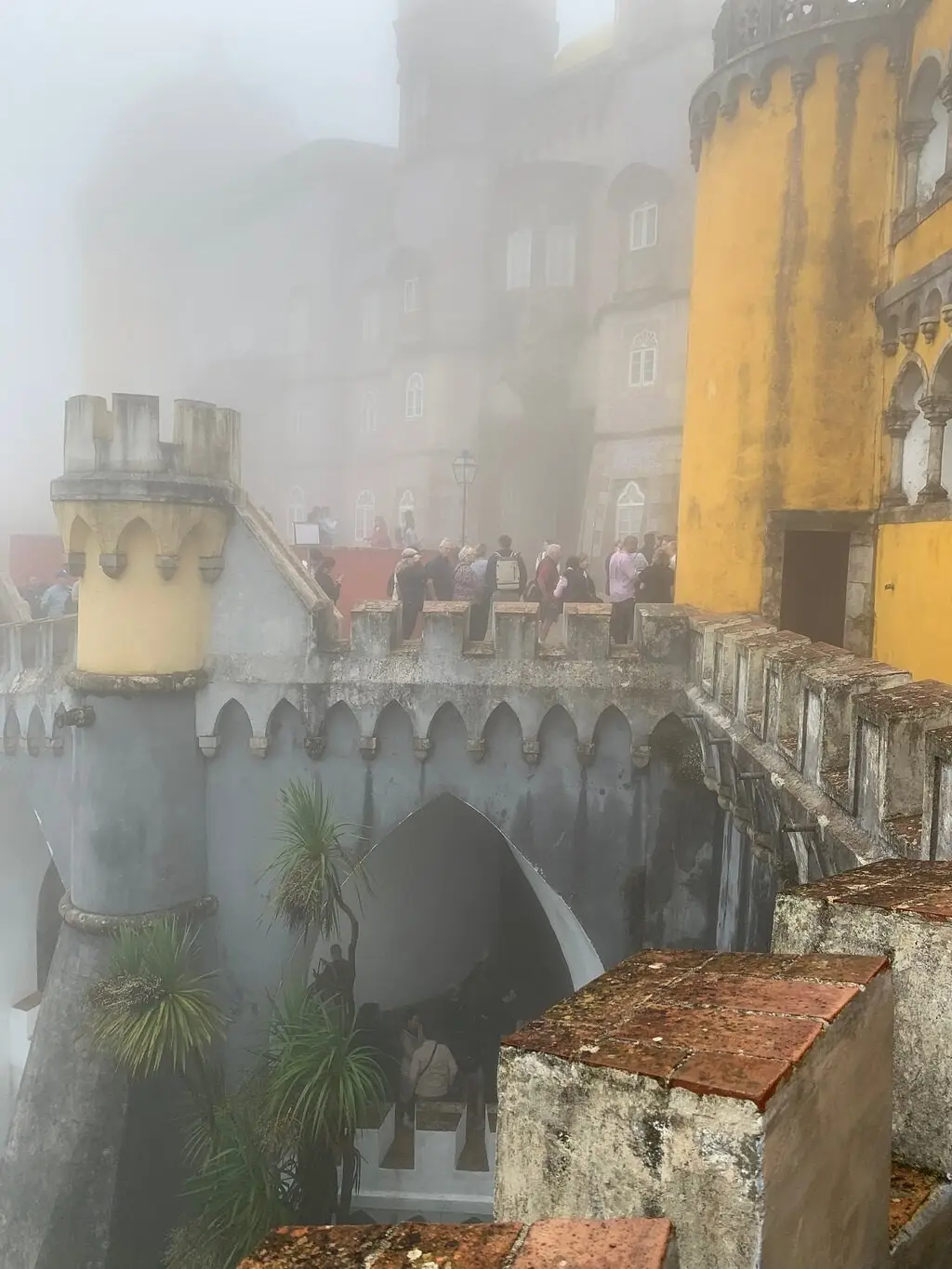
Mist on the mountain can make Sintra feel almost mysterious, but it also hides the views. More in our best time to visit guide.
Inside in summer: be cautious
The criticism of the interior at busy times is unusually consistent: slow queues, crowded corridors, the feeling of being rushed. One Portuguese visitor felt too many people were let into the same spaces at once; another spent a long time on the entry process and felt they saw little.
That doesn’t mean you will hate it. But if you visit in July or August and royal interiors are not your thing, those hours might be better spent at Quinta da Regaleira, Monserrate, Sintra’s historic centre, the Pena gardens, a viewpoint, an unhurried lunch, or the coast.
What about the gardens?
Don’t treat the park as the path to the palace. It is a major part of Pena, and some travellers prefer it. Its sights include the Temple of Columns, the High Cross (Cruz Alta), the Valley of the Lakes, the Queen’s Fern Valley, the Camellia Garden, Pena Farm and the Chalet and Garden of the Countess of Edla (Parques de Sintra). Inside the palace you move with the crowd; outside you can slow down, find quieter corners and look at the palace from a distance. See our park guide.
Pena, Regaleira or Monserrate?
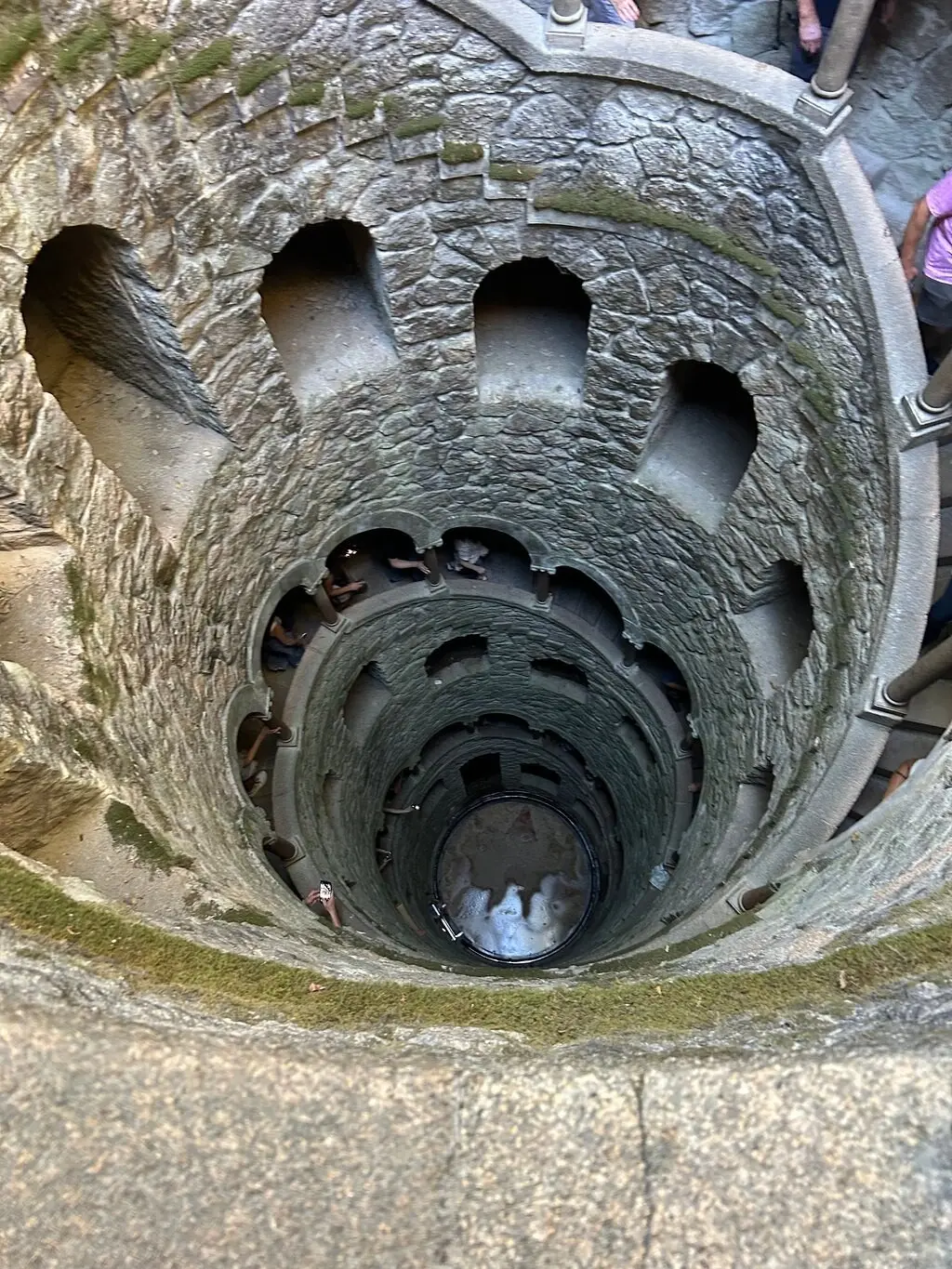
Pena is the famous one. Quinta da Regaleira is the one many travellers end up loving more, for its grottoes, tunnels and wells. Monserrate keeps coming up as the calmer alternative.
- Iconic architecture: Pena.
- Mystery and gardens: Regaleira.
- Calm gardens and architecture: Monserrate.
- Ruins and views: the Moorish Castle.
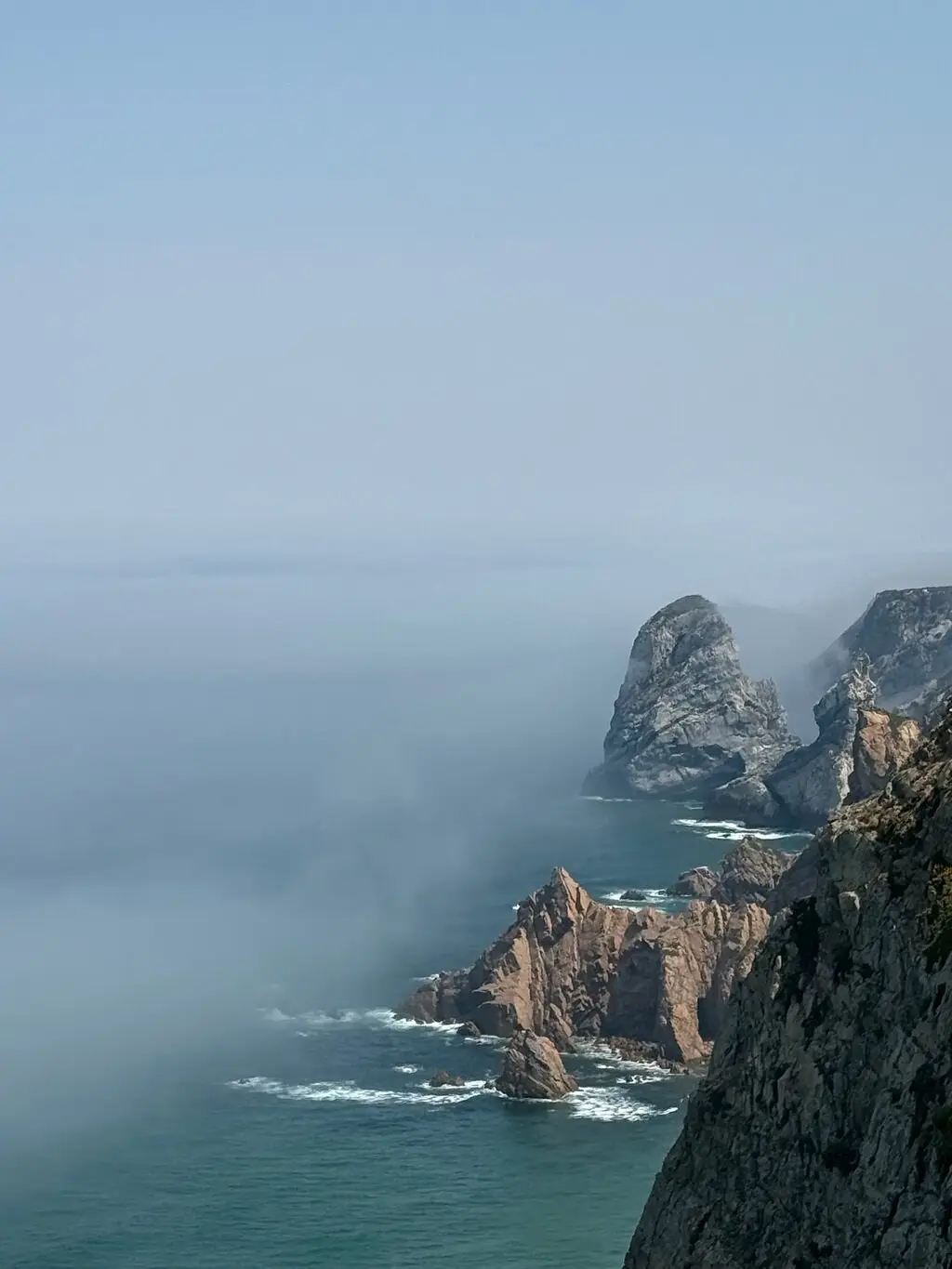
- Atlantic scenery: Cabo da Roca.
You don’t need all of them. Pick the combination that suits you.
How many places can you see in one day?
Fewer than social media itineraries suggest. A realistic plan protects your priorities:
- Relaxed (best for a first visit): Pena outside and terraces in the morning, lunch in Sintra, Quinta da Regaleira in the afternoon, the historic centre after.
- Active: Pena early, the Moorish Castle late morning, lunch in Sintra, Regaleira in the afternoon. Possible, but physically demanding.
- Two days: day 1 Regaleira, Monserrate and the centre; day 2 Pena, the Moorish Castle and the coast.
A local guide replying to a two-day plan recommended separating the heavier sights rather than forcing them into one day. Visit Pena first if you have an interior slot: it is the stop most sensitive to timed entry, crowds and traffic, and the route then runs downhill. Cabo da Roca is beautiful, but treat it as a bonus: maps show distance, not traffic, queues or tiredness. Our day trip plan has the details.
Lunch in Sintra
Lunch can be part of the day or another source of stress. Travellers mention places such as Tascantiga, and a local guide kept recommending Bacalhau na Vila in the village. The practical advice matters more than the restaurant: eat before you are starving, and a slightly early or late lunch avoids the rush.
The mistakes visitors make most
- Trying to see everything in one day.
- Underestimating transport: Sintra looks close on a map.
- Booking a tight timed entry with no buffer.
- Assuming the interior is automatically the best part.
- Ignoring the physical effort: you are visiting a mountain.
- Losing the morning to queues when the park would have been enough.
- Treating every attraction as equally important.
- Forgetting that fog and cooler weather change the experience.
The official-rule mistakes, such as missing a slot or the shuttle, are in our six mistakes to avoid.
So, is it worth it?
Yes, if you visit the version of Pena that matches what you enjoy. Colour, views and photos: go. Gardens and landscapes: go. Royal history and interiors: consider going inside. Hate crowds and have one day: think before paying extra for the interior. Limited mobility or young children: plan the walking and the shuttle, and keep the day simple.
My practical recommendation for a first visit: start early and go to Pena first. If the interior matters, book the timed visit and leave a generous buffer; if it doesn’t, consider the outside and park instead. Take your time on the terraces, don’t rush the gardens, then head downhill for lunch and Regaleira in the afternoon. Leave Cabo da Roca and Monserrate for another day unless you have time or efficient transport.
The goal isn’t a longer list. It is leaving Sintra thinking: “That was a really good day.” And yes, your legs will probably complain. That is part of Sintra too.
Questions people ask
Is Pena Palace worth visiting?
Yes, for the colourful architecture, the terraces, the views and the park. Whether the palace rooms are worth it depends on how much you care about royal interiors and how busy it is: many visitors say the inside feels rushed at peak times.
Is it worth going inside Pena Palace?
If you love history and interiors, yes. If you have one day, dislike crowds and visit in high season, many travellers say the outside, terraces and park gave them the experience they came for.
How long do you need at Pena Palace?
Plan about 1.5–2 hours for the terraces and the outside, 2.5–3 hours with the palace rooms, longer to explore the park.
Pena Palace or Quinta da Regaleira?
They are different: Pena is the colourful landmark with views, Regaleira the garden of grottoes, tunnels and wells. Many visitors with one day see Pena early and give Regaleira the afternoon.